

 English
 简体中文
简体中文 Русский
 Español
ZHEJIANG LUBA TRAFFIC TECHNOLOGY CO., LTD. * TRAFFIC SAFETY, WE LEAD EVERY STEP * ZHEJIANG LUBA TRAFFIC TECHNOLOGY CO., LTD. * TRAFFIC SAFETY, WE LEAD EVERY STEP * ZHEJIANG LUBA TRAFFIC TECHNOLOGY CO., LTD. * TRAFFIC SAFETY, WE LEAD EVERY STEP * ZHEJIANG LUBA TRAFFIC TECHNOLOGY CO., LTD.
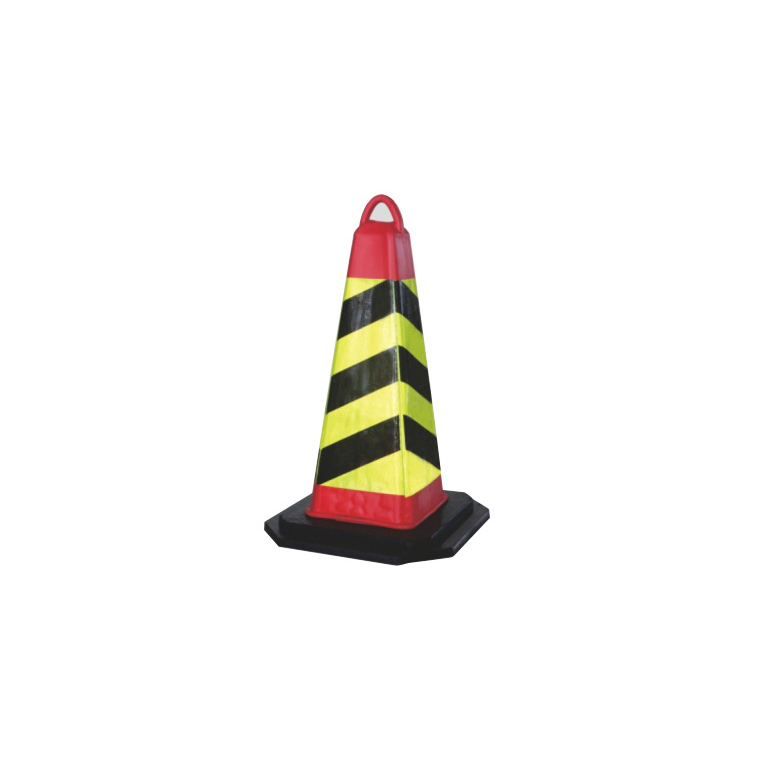
How Does A Traffic Cone Factory Ensure Product Visibility And Road Safety
Traffic cones look simple. Most people notice only the shape and the bright color. In a factory setting, the focus goes far beyond appearance. Every detail is arranged to make sure the cone can be seen quickly and understood without effort. That is where visibility and road safety begin.
A Traffic Cone Factory treats visibility as a working condition, not decoration. It connects color, form, surface, and placement behavior into one practical system. The aim is to help people notice changes on the road in a short moment, even when attention is divided.
Why is visibility such a critical factor in traffic cone use?
Road environments are often unpredictable. Drivers move at different speeds. Pedestrians focus on many things at once. In such conditions, a warning object must be easy to detect.
A traffic cone works as a temporary signal. It tells people that something on the road has changed. This could be a blocked lane, a work zone, or a diverted path. If the cone is not noticed quickly, the message is lost.
Factories therefore think about visibility in layers. Not just "can it be seen," but also "how fast can it be seen."
There are three simple visual expectations:
- It should stand out immediately when first noticed
- It should remain clear when the viewer gets closer
- It should still be recognizable from a distance
These expectations guide almost every production decision.
How do factories decide on cone colors for road safety?
Color is one of the most direct tools for attracting attention. Traffic cone factories usually choose tones that contrast strongly with common surroundings like asphalt, concrete, or soil.
The goal is not complexity. It is clarity.
Bright colors work because they break the visual pattern of the environment. When the eye scans a road, neutral tones dominate. A cone interrupts that pattern and draws focus.
Factories also care about how color behaves in different conditions. Sunlight, shade, rain, and indoor lighting can all change how a color appears. A stable visual effect is important so that the cone does not lose attention value in certain conditions.
Even distribution of color matters as well. Uneven surfaces or patchy tones can reduce recognition speed, especially at a distance.
Key visual considerations in color application
| Visual element | Purpose |
|---|---|
| Strong contrast | Helps the cone stand out from road surfaces |
| Stable appearance | Keeps visibility consistent under different lighting |
| Even coating | Avoids visual confusion from uneven color patches |
| Background separation | Improves recognition in busy environments |
Color is not treated as decoration in production. It is part of the safety function.
What role does material choice play in visibility?
A traffic cone is not only about color. The surface material also affects how the cone appears in real conditions.
Different materials interact with light in different ways. Some surfaces reflect light softly. Others create a stronger visual response. Factories select materials based on where the cone will be used and how it should behave visually.
Flexibility is also important. A cone is often moved, stacked, or pressed during use. If the material is too rigid or too weak, it may affect shape stability, which then affects visibility.
Weather exposure is another factor. Outdoor cones face sunlight, rain, dust, and temperature changes. These conditions can slowly change how the surface looks. A stable material helps maintain consistent appearance over time.
Factories often look for a balance between durability and visual clarity rather than focusing on one side only.
How is consistent appearance maintained during production?
Traffic cones might seem simple, but when you see them scattered along highways or work zones, you instantly recognize them because they all look pretty much the same. That visual consistency matters a lot for safety and quick recognition.
Factories that make good ones put real effort into keeping every cone looking and performing the same. It comes down to controlling each step of the process carefully.
It usually begins with material preparation. If the plastic or rubber mix isn't consistent in color and quality from the start, you'll end up with cones that vary in brightness or fade differently later. Next comes the shaping stage. Here, they focus on making sure the mold fills evenly so every cone has the same height, base width, and smooth surfaces. Even tiny differences in how the material flows can cause uneven shine or visible lines that catch light strangely.
After the cones come out of the mold, surface treatment plays a big role — whether it's adding reflective strips properly or applying a protective coating. This step helps lock in that clean, uniform look.
Finally, there's inspection. Workers (or automated systems) check each batch for color match, surface smoothness, and overall shape. They catch anything that doesn't meet the standard before it leaves the factory.
But real consistency goes beyond the factory gate. The best manufacturers also think about how the cone holds up under sun, rain, and passing trucks over months or years. A good cone shouldn't turn faded, warped, or dull too quickly, because that breaks the visual reliability drivers depend on.
How do factories check whether cones are visible enough?
Testing is part of ensuring road safety performance. A cone may look correct during production but behave differently in real conditions.
Factories often observe cones under different lighting situations. Daylight, shadows, and artificial lighting can change how visible an object appears.
Distance is another important factor. A cone must still be recognizable even when viewed from far away. This is especially important on roads where vehicles move quickly.
Angles are also checked. In real use, cones are not always seen from the front. They may be viewed from the side or partially blocked by other objects.
Rather than relying on complex systems, many factories use repeated observation and practical comparison. The goal is to understand how the cone behaves in real situations.
How is nighttime visibility handled in production?
Nighttime changes the whole game for traffic cones. With less light, drivers rely on quick recognition more than bright colors, so factories take this part seriously.
Good manufacturers test and design cones specifically for how they behave under headlights and street lamps. The goal isn't to make them glow like a Christmas tree — it's to make them clearly noticeable without blinding or distracting drivers.
A lot depends on the surface. Some materials and reflective tapes are chosen because they bounce light back in a controlled way, giving a clean, bright return when hit by car lights instead of scattering it everywhere. Too much glare can be just as bad as not enough visibility.
Shape matters at night too. Even when the orange color fades into the dark, the classic cone silhouette still tells the brain "hazard ahead." That familiar outline helps recognition even in low light.
The better factories don't just guess at this stuff. They actually set up low-light testing areas — sometimes late in the evening or in special dark rooms — and watch how different cones perform under real headlight conditions. If something isn't cutting it, they tweak the reflective strips, the angle of the surface, or the material mix based on what they actually see, not just theory.
It's one of those quiet details that separates average cones from ones you can really trust when you're driving at night.
What quality checks help maintain road safety performance?
Quality control is closely tied to visibility. A cone that looks slightly off may reduce recognition speed on the road.
Factories usually check appearance at multiple stages. They look at color consistency, surface condition, and overall shape alignment.
Physical stability is also checked. A cone must stay upright during use and not deform easily after repeated handling.
Storage conditions are another consideration. Cones are often stacked or transported in large numbers. These conditions can affect surface appearance, so factories observe how well the cone holds its form.
Common quality focus points
| Focus area | Purpose |
|---|---|
| Color consistency | Supports fast recognition |
| Shape stability | Maintains clear visual identity |
| Surface condition | Ensures smooth light response |
| Handling durability | Reflects real usage conditions |
Quality checks are repeated throughout production rather than only at the end.
How do real-world usage environments influence cone design?
Traffic cones are used in many different situations. Roads under maintenance, parking control areas, warehouse spaces, and temporary event zones all require different levels of visibility.
Factories adjust design thinking based on these environments. Some situations need cones that are visible from a long distance. Others need cones that remain clear in tighter spaces.
Movement patterns also matter. In high-traffic areas, cones must remain noticeable even when surrounded by many visual distractions.
Storage and transport requirements also influence design. Cones are often stacked or moved frequently. This affects how materials and shape structures are selected.
Environmental awareness has also become part of production thinking. Factories pay attention to how materials perform over time and how often cones need to be replaced.
The core idea stays the same across all variations. A traffic cone must communicate a simple message without delay: something has changed here, pay attention.
ZHEJIANG LUBA TRAFFIC TECHNOLOGY CO., LTD. * TRAFFIC SAFETY, WE LEAD EVERY STEP * ZHEJIANG LUBA TRAFFIC TECHNOLOGY CO., LTD. * TRAFFIC SAFETY, WE LEAD EVERY STEP * ZHEJIANG LUBA TRAFFIC TECHNOLOGY CO., LTD. * TRAFFIC SAFETY, WE LEAD EVERY STEP * ZHEJIANG LUBA TRAFFIC TECHNOLOGY CO., LTD.
ZHEJIANG LUBA TRAFFIC TECHNOLOGY CO., LTD. * TRAFFIC SAFETY, WE LEAD EVERY STEP * ZHEJIANG LUBA TRAFFIC TECHNOLOGY CO., LTD. * TRAFFIC SAFETY, WE LEAD EVERY STEP * ZHEJIANG LUBA TRAFFIC TECHNOLOGY CO., LTD. * TRAFFIC SAFETY, WE LEAD EVERY STEP * ZHEJIANG LUBA TRAFFIC TECHNOLOGY CO., LTD.

Zhejiang Luba Traffic Technology Co., Ltd. has been dedicated to the R&D and production of rubber and plastic products in the traffic facilities field since its establishment in 2001.
- (+86) 15724246878
- [email protected]
- No.399 West Guangming Road, Sanmen, Taizhou, Zhejiang, China.
Contact us to get our latest product information.
Copyright © Zhejiang Luba Traffic Technology Co.,Ltd. Rights Reserved.

Rubber Speed Hump Supplier