

 English
 简体中文
简体中文 Русский
 Español
ZHEJIANG LUBA TRAFFIC TECHNOLOGY CO., LTD. * TRAFFIC SAFETY, WE LEAD EVERY STEP * ZHEJIANG LUBA TRAFFIC TECHNOLOGY CO., LTD. * TRAFFIC SAFETY, WE LEAD EVERY STEP * ZHEJIANG LUBA TRAFFIC TECHNOLOGY CO., LTD. * TRAFFIC SAFETY, WE LEAD EVERY STEP * ZHEJIANG LUBA TRAFFIC TECHNOLOGY CO., LTD.
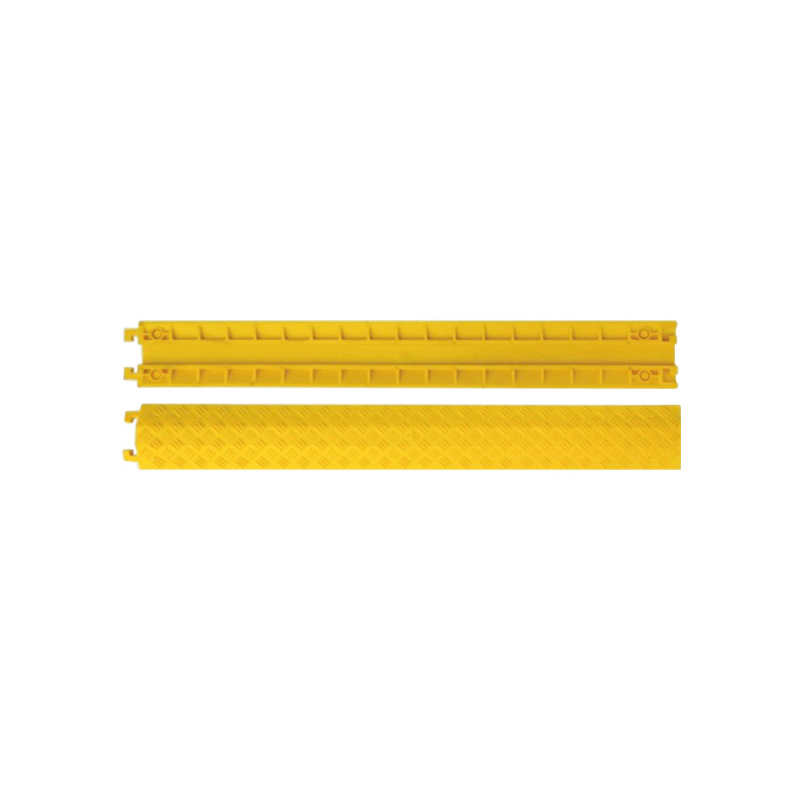
How Do Cable Protector Supplier Balance Safety Requirements and Practical Use
Cable protectors are easy to overlook until something goes wrong. A loose cable, a rushed setup, or a crowded walkway can turn a small detail into a real problem. In many working environments, these products sit quietly between risk and routine. They guide movement, protect lines, and reduce disruption. At the same time, they must fit into spaces where people expect things to work without effort.
For suppliers, the real challenge is not only about strength or durability. It is about making a product that feels natural in use while still doing its job. A design that focuses only on protection may become hard to handle. A design that focuses only on convenience may not hold up when pressure increases. The balance sits somewhere in between, and it shifts depending on how the product is used.
Why Does Safety Shape Every Early Design Decision?
When suppliers begin thinking about cable protectors, safety often comes into focus very quickly. Exposed cables can interrupt movement. They can also create risk in places where attention is already divided.
A well-designed protector does more than cover cables. It guides how people move across a space. It reduces sudden changes in surface level. It helps prevent accidental contact.
But safety is not only about avoiding obvious hazards. It also involves subtle details. A surface that feels unstable can make people hesitate. A design that blends too much into the floor may not be noticed. On the other hand, a design that stands out too strongly may distract from other elements in the environment.
Suppliers often look at how people actually move, not how they are expected to move. This difference influences shape, color, and surface feel. Safety begins with observation as much as with design.
How Do Suppliers Keep Products Easy to Handle Without Losing Control?
Once a cable protector leaves the design stage, it enters a very practical world. Installation teams may need to place it quickly. Event crews may need to move it more than once in a single day. Maintenance staff may need to adjust it without stopping operations.
If a product is too heavy, it slows down handling. If it is too light, it may shift during use. If connections between sections are difficult, setup becomes frustrating. Each of these points affects how the product performs in real situations.
Suppliers often adjust weight and structure to support both stability and ease of movement. They may refine how sections connect so that alignment feels natural. Small improvements in handling can reduce mistakes during installation.
Ease of use is not separate from safety. When a product is simple to place and adjust, it is more likely to be used correctly.
What Changes When Cable Protectors Move Between Different Environments?
Not every environment treats cable protectors the same way. Indoor spaces tend to have predictable surfaces. Movement is often smoother, and lighting conditions are more controlled. In these settings, comfort and ease of crossing become important.
Outdoor environments introduce more variation. Surfaces may be uneven. Conditions may change throughout the day. Moisture, dust, or temperature shifts can influence how the product behaves.
Temporary setups create a different kind of pressure. Installation must be quick. Removal must be just as smooth. There is little room for complex steps.
Industrial spaces bring heavier movement. Equipment may pass over the same point many times. The protector must hold its form without becoming difficult to cross.
Suppliers rarely design for only one situation. They consider how a product might perform in several environments, even if it is intended for a specific use.
How Do Material Choices Affect Both Protection and Daily Use?
Material selection is often discussed in terms of strength, but it also affects how a product feels during use.
A firm material may resist pressure well, but it can feel harsh under frequent movement. A softer material may improve comfort, but it needs careful design to avoid too much movement under load.
Surface texture is closely linked to material. A smooth finish may allow easy crossing, yet it may not provide enough grip in certain conditions. A rough surface may increase stability but affect the way people step over it.
Weight also comes into play. Heavier materials tend to stay in place. Lighter materials are easier to move. Neither option works on its own. Balance is required.
Suppliers often test how materials behave over time. Initial performance does not always reflect long-term use.
Why Does Structural Design Matter Beyond Appearance?
At a distance, many cable protectors look similar. Up close, small differences begin to appear.
The internal layout determines how cables sit inside. Poor spacing can create uneven pressure. Good spacing allows cables to rest without stress.
The outer shape affects how force is spread. A well-balanced form distributes pressure across the surface. This reduces strain on any single point.
Connections between sections are another key detail. If sections do not align smoothly, gaps may appear. These gaps can affect both safety and ease of movement.
Structure is not just about form. It is about how each part responds to real-world use.
How Do User Habits Influence Design Adjustments?
People do not always use products in the way designers expect. Over time, patterns of use begin to emerge.
Some users step over protectors carefully. Others cross without looking. Some environments see constant movement. Others have bursts of activity followed by quiet periods.
These habits influence how products wear and how they are perceived. A design that works well under controlled conditions may reveal weaknesses after repeated use.
Suppliers often gather feedback from different types of users. This feedback is not always formal. Sometimes it comes from simple observation or routine communication.
Small adjustments based on user habits can improve both safety and convenience without changing the overall design.
What Hidden Effects Come From Transport and Storage?
Cable protectors go through multiple transfers and storage periods before being installed, with plenty of lifting and moving along the whole supply chain.
Products get piled up during transit. Long-term stacking weight slowly warps their form. Minor deformations from stacking will mess up joint fitting during later assembly.
Shipping containers lack steady environmental control. Swings in temperature and humidity create subtle, lasting changes to the material's physical properties.
Long-term storage brings additional risks. Goods can sit idle for months before deployment, and the material keeps reacting to surrounding air conditions the whole time.
Loading and unloading creates constant jostling. Every lift, drag and bump adds minor mechanical strain to the product.
Manufacturers cannot only focus on factory finished quality. The product needs to maintain its performance after long-distance delivery and storage, not just when it rolls off the production line.
How Do Suppliers Approach the Balance Between Stability and Flexibility?
Structural stability and pliability are two conflicting performance traits. A rigid protector stays anchored and won't slide around under load; flexible variants conform to uneven ground and adapt to varying site conditions.
Overly stiff protectors fail to lay flat on bumpy or irregular flooring. If the material is too soft, the unit will slide or deform under weight.
Producers tune raw material thickness, outer contour and internal support frameworks to hit a workable middle ground between the two traits.
This balanced formula is never universal. Design standards shift based on application scenarios. Models made for smooth indoor flooring are engineered differently from those meant for rough outdoor ground.
Design teams don't aim to eliminate trade-offs entirely. The core approach is precise tuning to control compromises to an acceptable range for each use case.
What Trade-Offs Appear Most Often in Real Use?
Balancing safety and practical use often involves small trade-offs. These choices shape how the product performs day to day.
| Aspect | More Focus on Safety | More Focus on Practical Use | Balanced Approach |
|---|---|---|---|
| Height | Greater cable coverage | Easier step-over | Moderate height |
| Surface feel | Strong grip | Smooth crossing | Controlled texture |
| Weight | Firm placement | Easier handling | Managed weight |
| Flexibility | Structural hold | Adaptation to ground | Partial flexibility |
| Visibility | Clear awareness | Visual comfort | Subtle contrast |
These decisions are not made once. They are revisited as conditions change.
How Do Suppliers Keep Designs Consistent While Making Improvements?
Consistency matters because users rely on familiarity. When a product behaves in a predictable way, it becomes easier to trust.
At the same time, improvement is necessary. New environments and new expectations create pressure for change.
Suppliers often make gradual adjustments rather than large shifts. A small change in connection design or surface pattern may improve performance without altering the overall feel.
This approach allows products to evolve while remaining recognizable.
How Does Daily Use Reveal What Design Plans Cannot Predict?
Real use often uncovers details that are not obvious during design.
Repeated movement may wear certain areas more than expected. Connections may loosen slightly over time. Environmental exposure may change how surfaces feel.
Users may also interact with the product in unexpected ways. Some may move it frequently. Others may leave it in place for long periods.
These patterns provide insight. They show how design choices perform outside controlled settings.
Suppliers learn from these observations and adjust where needed.
Cable protector supplier work in a space shaped by movement, variation, and constant interaction. Safety remains central, but it cannot stand alone. Practical use determines how safety is experienced in real environments. Each decision, from material choice to structural detail, reflects a quiet balance between protection and ease of use.
ZHEJIANG LUBA TRAFFIC TECHNOLOGY CO., LTD. * TRAFFIC SAFETY, WE LEAD EVERY STEP * ZHEJIANG LUBA TRAFFIC TECHNOLOGY CO., LTD. * TRAFFIC SAFETY, WE LEAD EVERY STEP * ZHEJIANG LUBA TRAFFIC TECHNOLOGY CO., LTD. * TRAFFIC SAFETY, WE LEAD EVERY STEP * ZHEJIANG LUBA TRAFFIC TECHNOLOGY CO., LTD.
ZHEJIANG LUBA TRAFFIC TECHNOLOGY CO., LTD. * TRAFFIC SAFETY, WE LEAD EVERY STEP * ZHEJIANG LUBA TRAFFIC TECHNOLOGY CO., LTD. * TRAFFIC SAFETY, WE LEAD EVERY STEP * ZHEJIANG LUBA TRAFFIC TECHNOLOGY CO., LTD. * TRAFFIC SAFETY, WE LEAD EVERY STEP * ZHEJIANG LUBA TRAFFIC TECHNOLOGY CO., LTD.

Zhejiang Luba Traffic Technology Co., Ltd. has been dedicated to the R&D and production of rubber and plastic products in the traffic facilities field since its establishment in 2001.
- (+86) 15724246878
- [email protected]
- No.399 West Guangming Road, Sanmen, Taizhou, Zhejiang, China.
Contact us to get our latest product information.
Copyright © Zhejiang Luba Traffic Technology Co.,Ltd. Rights Reserved.

Rubber Speed Hump Supplier