

 English
 简体中文
简体中文 Русский
 Español
ZHEJIANG LUBA TRAFFIC TECHNOLOGY CO., LTD. * TRAFFIC SAFETY, WE LEAD EVERY STEP * ZHEJIANG LUBA TRAFFIC TECHNOLOGY CO., LTD. * TRAFFIC SAFETY, WE LEAD EVERY STEP * ZHEJIANG LUBA TRAFFIC TECHNOLOGY CO., LTD. * TRAFFIC SAFETY, WE LEAD EVERY STEP * ZHEJIANG LUBA TRAFFIC TECHNOLOGY CO., LTD.
Inside a Traffic Cones Factory: Understanding the Production Process
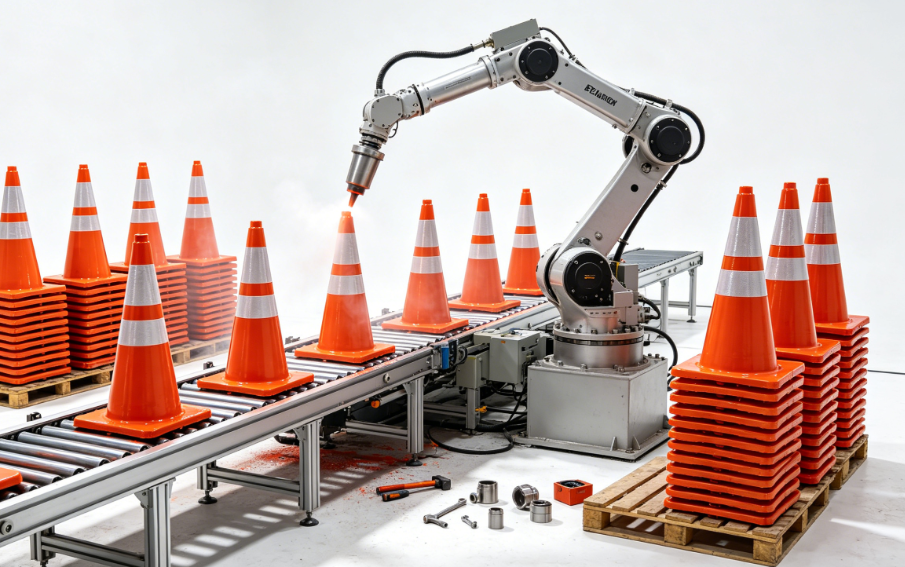
The image of a traffic cone is simple. Bright color. Clear shape. Easy to move. Yet behind that familiar object sits a production process that blends routine work with careful control. In a Traffic Cones Factory , each stage connects to the next in a steady rhythm. Materials arrive, shapes are formed, surfaces are treated, and finished cones move out toward roads, construction zones, and public spaces.
We are looks inside that process. It follows how raw materials become finished cones, and how factories organize work to keep output stable while meeting safety expectations.
How Do Raw Materials Enter the Production Line?
The process begins with material selection and preparation. Traffic cones are usually made from flexible plastics. These materials are chosen for their ability to bend without breaking, hold color, and resist wear from weather and handling.
At the factory, raw materials arrive in bulk form. They are stored in controlled spaces to avoid contamination. Cleanliness matters here. Dust or moisture can affect the final surface and strength of the cone.
Before production starts, materials go through a preparation stage. They may be blended to achieve the desired balance of flexibility and firmness. Color is added at this point. The familiar orange or other bright shades are not painted on later. They are part of the material itself, which helps maintain visibility over time.
Workers or automated systems check the material flow. Consistency is important. If the mix changes, the final product may vary in thickness or flexibility.
What Happens During the Shaping Stage?
Once materials are ready, they move into shaping. This is where the cone begins to take form. The material is heated until it becomes soft enough to mold. It is then placed into molds that define the cone's shape.
Molds are designed to produce smooth surfaces and even walls. The shape must be stable but not rigid. Traffic cones need to recover after being pressed or bent.
Inside the mold, the material expands or settles into place. Pressure and temperature are controlled to keep the shape uniform. Even small changes can affect how the cone stands or how it responds to impact.
After shaping, the material begins to cool. Cooling is not rushed. If done too quickly, it may to uneven surfaces or internal stress. Factories often use controlled cooling methods to maintain quality.
How Is Surface Visibility Added?
A traffic cone must be seen clearly in different conditions. That is why surface treatment plays a key role in the process. While the base color provides daytime visibility, reflective elements help at night or in low light.
Reflective layers are applied after the cone is formed. The surface must be clean and smooth to ensure proper bonding. These layers may come in the form of bands or sleeves that wrap around the cone.
Application requires alignment. The reflective section should sit evenly and securely. If placed incorrectly, it may affect visibility or peel over time.
This stage often combines manual attention with guided tools. Workers check placement while machines assist with positioning and pressure.
How Do Factories Ensure Structural Balance?
A traffic cone is more than its outer shape. It must stand steady in outdoor conditions. Wind, passing vehicles, and uneven ground all affect stability.
To address this, many cones include a weighted base. This may be integrated during molding or added as a separate step. The goal is to keep the cone upright without making it too heavy to handle.
Balance is tested during production. Cones are placed on flat surfaces and observed for tilt or wobble. Adjustments may be made if the base does not align with the body.
The connection between the upper cone and its base is also important. It must hold under repeated use. Factories often check this bond through simple stress tests.
What Role Does Inspection Play in the Process?
Inspection runs through the entire production line. It is not limited to one stage. Each step includes checks to ensure that the cone meets expected standards.
Visual inspection is common. Workers look for surface marks, uneven color, or misaligned reflective sections. These checks are quick but effective.
Physical inspection may involve pressing or bending the cone. This helps confirm flexibility and recovery. A cone should return to its original shape without cracking.
Factories may also check dimensions and symmetry. The cone should stand straight and maintain its intended form. Irregular shapes can affect performance in real-world use.
Rejected items are separated and reviewed. Some may be reprocessed, while others are discarded. This helps maintain consistency in the final output.
How Are Traffic Cones Finished and Prepared for Use?
After inspection, cones move to finishing. This stage includes cleaning, stacking, and packaging. The goal is to prepare the product for transport without damage.
Cleaning removes any dust or residue from earlier stages. Even small marks can affect appearance, especially on bright surfaces.
Stacking is done carefully. Traffic cones are designed to nest within each other, saving space. Proper stacking prevents deformation during storage and shipping.
Packaging varies depending on the destination. Some cones are bundled, while others are packed in boxes. The method depends on handling needs and transport conditions.
How Does Workflow Organization Affect Production?
A traffic cones factory operates as a connected system. Each stage relies on the one before it. If one part slows down, the entire line can be affected.
To manage this, factories organize workflow in a steady sequence. Materials move in one direction, from preparation to final packaging. This reduces handling and keeps the process efficient.
Automation plays a role, but human oversight remains important. Workers monitor transitions between stages and adjust when needed. This balance helps maintain both speed and control.
Factories also plan for maintenance. Equipment used in shaping and cooling must remain in stable condition. Regular checks help avoid interruptions.
What Environmental Considerations Are Involved?
Production today often includes attention to environmental impact. Traffic cone factories consider how materials are used and how waste is handled.
Unused material may be collected and reintroduced into the process when possible. This reduces waste and supports more efficient use of resources.
Energy use is also managed. Heating and cooling stages require power, so factories look for ways to keep these processes stable without excess consumption.
Water and air quality are monitored as well. Clean production spaces support both product quality and worker safety.
How Does the Process Adapt to Different Needs?
Not all traffic cones are the same. Some are used for short-term work zones, while others remain in place for longer periods. This affects how they are produced.
Factories adjust materials, shape, and surface treatment based on intended use. The core process remains similar, but details change.
Flexible production lines allow for these adjustments. Molds can be changed, and surface treatments can vary. This helps factories respond to different requirements without rebuilding the entire system.
Production Stages Overview
| Stage | Key Focus | Main Outcome |
|---|---|---|
| Material Preparation | Blending and color integration | Consistent base material |
| Shaping | Molding and forming | Defined cone structure |
| Cooling | Controlled temperature reduction | Stable shape and surface |
| Surface Treatment | Reflective application | Enhanced visibility |
| Assembly & Balance | Base integration | Improved stability |
| Inspection | Visual and physical checks | Quality assurance |
| Finishing | Cleaning and packaging | Ready-for-use product |
Inside a traffic cones factory, the process moves with quiet precision. Each cone passes through a series of hands and machines, shaped by heat, checked by eye, and prepared for use in environments where visibility and stability matter. The result is a product that appears simple but carries the mark of careful production at every step.
ZHEJIANG LUBA TRAFFIC TECHNOLOGY CO., LTD. * TRAFFIC SAFETY, WE LEAD EVERY STEP * ZHEJIANG LUBA TRAFFIC TECHNOLOGY CO., LTD. * TRAFFIC SAFETY, WE LEAD EVERY STEP * ZHEJIANG LUBA TRAFFIC TECHNOLOGY CO., LTD. * TRAFFIC SAFETY, WE LEAD EVERY STEP * ZHEJIANG LUBA TRAFFIC TECHNOLOGY CO., LTD.
ZHEJIANG LUBA TRAFFIC TECHNOLOGY CO., LTD. * TRAFFIC SAFETY, WE LEAD EVERY STEP * ZHEJIANG LUBA TRAFFIC TECHNOLOGY CO., LTD. * TRAFFIC SAFETY, WE LEAD EVERY STEP * ZHEJIANG LUBA TRAFFIC TECHNOLOGY CO., LTD. * TRAFFIC SAFETY, WE LEAD EVERY STEP * ZHEJIANG LUBA TRAFFIC TECHNOLOGY CO., LTD.

Zhejiang Luba Traffic Technology Co., Ltd. has been dedicated to the R&D and production of rubber and plastic products in the traffic facilities field since its establishment in 2001.
- (+86) 15724246878
- [email protected]
- No.399 West Guangming Road, Sanmen, Taizhou, Zhejiang, China.
Contact us to get our latest product information.
Copyright © Zhejiang Luba Traffic Technology Co.,Ltd. Rights Reserved.

Rubber Speed Hump Supplier