

 English
 简体中文
简体中文 Русский
 Español
ZHEJIANG LUBA TRAFFIC TECHNOLOGY CO., LTD. * TRAFFIC SAFETY, WE LEAD EVERY STEP * ZHEJIANG LUBA TRAFFIC TECHNOLOGY CO., LTD. * TRAFFIC SAFETY, WE LEAD EVERY STEP * ZHEJIANG LUBA TRAFFIC TECHNOLOGY CO., LTD. * TRAFFIC SAFETY, WE LEAD EVERY STEP * ZHEJIANG LUBA TRAFFIC TECHNOLOGY CO., LTD.
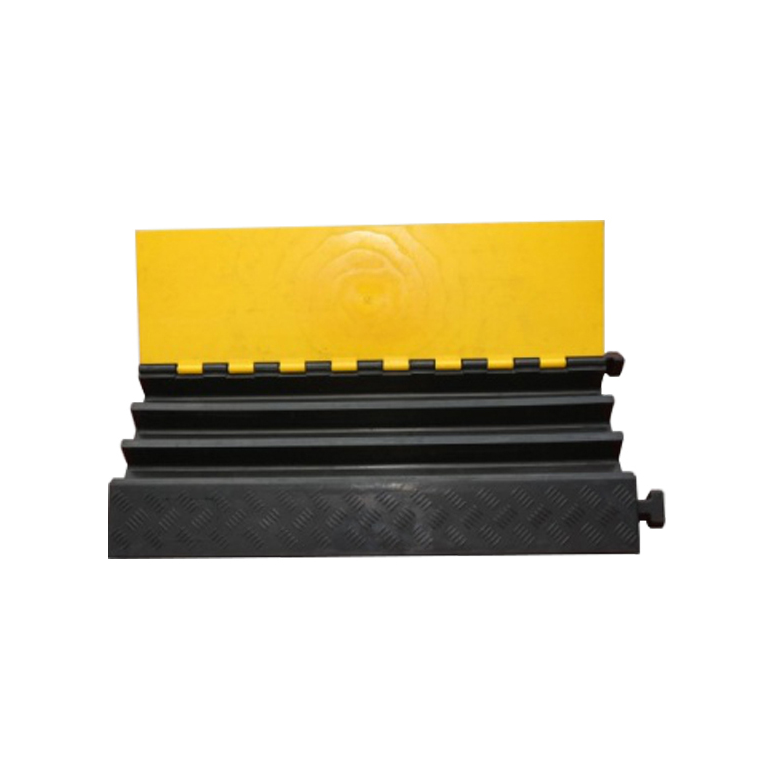
Cable Protector Wholesale Types and Their Use in Different Work Environments
Cable protectors are simple products, but they solve a very practical problem. Cables on the ground can easily become a risk factor in many working environments. People walk across them, equipment moves around them, and in some cases, vehicles pass over the same area repeatedly.
In these situations, cable protector wholesale products are used to keep things under control. They cover cables, guide pathways, and reduce direct exposure. What looks like a basic cover actually plays a steady role in keeping daily operations safer and more organized.
Over time, different types of cable protectors have developed. Each type fits a slightly different environment, depending on how the space is used.
Why do work environments rely on cable protection?
In many working spaces, cables are not static. They are placed temporarily, moved, extended, or rearranged depending on tasks.
This creates a few common issues:
- cables lying across walking paths
- pressure from foot traffic or equipment wheels
- tangled layouts that are hard to manage
- accidental disconnection or damage
Cable protectors reduce these problems by forming a physical cover over exposed lines. It is not a complex solution, but it works because it directly addresses the physical risk.
In environments where movement is constant, even small improvements in safety can make a noticeable difference.
What are the common types of cable protectors in wholesale supply?
Wholesale supply usually covers several design categories. They are not dramatically different in appearance at first glance, but their structure and usage purpose vary.
Single-channel cable protectors
This is the simplest type. One internal channel is used for one or a small group of cables.
It is often used in:
- small office layouts
- basic indoor setups
- temporary light equipment connections
The design focus is straightforward protection. Nothing more complicated than that.
It is often chosen when cable routing is simple and space is limited.
Multi-channel cable protectors
Multi-channel versions are used when several cables need to run through the same area but still stay separated.
They help avoid mixing cables together inside one space.
Common environments include:
- stage setups
- event halls
- technical work areas
The internal structure is divided, so different cables can stay organized while still sharing the same protective body.
This helps reduce confusion during setup and dismantling.
Heavy-duty cable protectors
Some environments are not gentle. Equipment is heavy, movement is constant, and pressure is repeated.
Heavy-duty cable protectors are used in these situations.
They are often found in:
- construction areas
- warehouse lanes
- industrial workshops
- loading zones
The main focus is strength. The structure is built to handle repeated pressure from walking traffic or rolling equipment.
In these environments, the protector is not just a cover. It becomes part of the working surface.
Flexible cable protectors
Not every workspace stays the same. Some layouts change frequently.
Flexible cable protectors are designed for that kind of situation. They can be adjusted, repositioned, or adapted to different paths.
They are commonly used in:
- temporary installations
- exhibitions
- mobile work setups
Instead of being fixed, they support changing layouts without complex installation.
This makes them practical for short-term or frequently changing environments.
Modular cable protection systems
Modular systems are built from connectable sections.
Each section can be joined with another, forming longer or customized pathways.
They are often used in:
- large venues
- long cable routes
- structured work areas
The advantage is scalability. Instead of choosing a fixed length, users can adjust according to real space needs.
This flexibility is useful when environments are large or irregular in shape.
How are cable protectors used in construction areas?
Construction sites are one of the most common application environments.
Cables in these areas are often exposed across open ground. Power lines, temporary lighting, and equipment connections are constantly adjusted.
Cable protectors help by:
- guiding cables along safer paths
- reducing damage from heavy movement
- keeping walkways clearer
- separating work zones from cable zones
In practice, they are usually placed where people or machines frequently pass. The goal is not only protection but also reducing interruptions in work flow.
What role do they play in events and public spaces?
Events bring together large groups of people in temporary environments. Cables are required for sound systems, lighting, screens, and other technical setups.
Without protection, these cables would remain exposed across open walkways.
Cable protectors help by covering these lines and keeping surfaces smoother for movement.
They also reduce visual clutter, which is important in spaces where presentation matters.
After the event, they can be removed quickly, which fits the temporary nature of the setup.
How are cable protectors used in industrial environments?
Industrial environments involve continuous and repetitive movement.
Machines operate, workers move, and materials are transported through fixed paths.
In such spaces, cables cannot remain exposed.
Cable protectors are placed along these paths to reduce wear and avoid accidental contact.
They help maintain stability in long-term use areas where equipment and people share the same space.
Why does material selection influence performance?
Material choice affects how a cable protector behaves in real use.
Different environments require different levels of rigidity and flexibility.
In general, material influences:
- how much pressure the surface can handle
- how flexible the product is during placement
- how it responds to repeated movement
- how stable it remains over time
A softer structure may be easier to position, while a stronger structure may perform better under continuous pressure.
The balance depends on where it will be used.
How does design affect real-world usability?
Design is not only about shape. In practical use, small structural details matter.
A good cable protector should:
- allow cables to be placed easily inside
- stay stable when stepped on or driven over
- reduce slipping on the ground surface
- guide movement smoothly over its top surface
In busy environments, even small design changes can affect how people move around it.
That is why design is often adjusted based on usage feedback rather than appearance.
Why is wholesale supply important in this category?
Cable protectors are often used in large quantities.
A single project may require multiple sections covering different areas.
Wholesale supply helps maintain:
- consistent product availability
- uniform structure across installations
- easier replacement when needed
- simplified planning for large projects
In construction or event planning, having the same type of product across a site makes installation more predictable.
How do different environments influence product choice?
There is no single type of cable protector suitable for every situation.
Selection usually depends on:
- how much traffic passes through the area
- whether vehicles are involved
- how long the setup will remain in place
- whether the layout changes frequently
- indoor or outdoor conditions
A light office setup does not require the same level of protection as an industrial site.
This is why multiple product types exist within the same category.
What is the general direction of usage today?
Cable protectors are becoming more widely used as workspaces become more flexible.
Temporary setups, shared environments, and mobile installations are more common than before.
As a result, cable management is no longer a background detail. It becomes part of basic planning.
Cable protectors support this change by providing a simple and direct way to manage exposed lines.
They are not complex systems, but they continue to play a steady role in keeping different environments organized and safer.
ZHEJIANG LUBA TRAFFIC TECHNOLOGY CO., LTD. * TRAFFIC SAFETY, WE LEAD EVERY STEP * ZHEJIANG LUBA TRAFFIC TECHNOLOGY CO., LTD. * TRAFFIC SAFETY, WE LEAD EVERY STEP * ZHEJIANG LUBA TRAFFIC TECHNOLOGY CO., LTD. * TRAFFIC SAFETY, WE LEAD EVERY STEP * ZHEJIANG LUBA TRAFFIC TECHNOLOGY CO., LTD.
ZHEJIANG LUBA TRAFFIC TECHNOLOGY CO., LTD. * TRAFFIC SAFETY, WE LEAD EVERY STEP * ZHEJIANG LUBA TRAFFIC TECHNOLOGY CO., LTD. * TRAFFIC SAFETY, WE LEAD EVERY STEP * ZHEJIANG LUBA TRAFFIC TECHNOLOGY CO., LTD. * TRAFFIC SAFETY, WE LEAD EVERY STEP * ZHEJIANG LUBA TRAFFIC TECHNOLOGY CO., LTD.

Zhejiang Luba Traffic Technology Co., Ltd. has been dedicated to the R&D and production of rubber and plastic products in the traffic facilities field since its establishment in 2001.
- (+86) 15724246878
- [email protected]
- No.399 West Guangming Road, Sanmen, Taizhou, Zhejiang, China.
Contact us to get our latest product information.
Copyright © Zhejiang Luba Traffic Technology Co.,Ltd. Rights Reserved.

Rubber Speed Hump Supplier