

 English
 简体中文
简体中文 Русский
 Español
ZHEJIANG LUBA TRAFFIC TECHNOLOGY CO., LTD. * TRAFFIC SAFETY, WE LEAD EVERY STEP * ZHEJIANG LUBA TRAFFIC TECHNOLOGY CO., LTD. * TRAFFIC SAFETY, WE LEAD EVERY STEP * ZHEJIANG LUBA TRAFFIC TECHNOLOGY CO., LTD. * TRAFFIC SAFETY, WE LEAD EVERY STEP * ZHEJIANG LUBA TRAFFIC TECHNOLOGY CO., LTD.
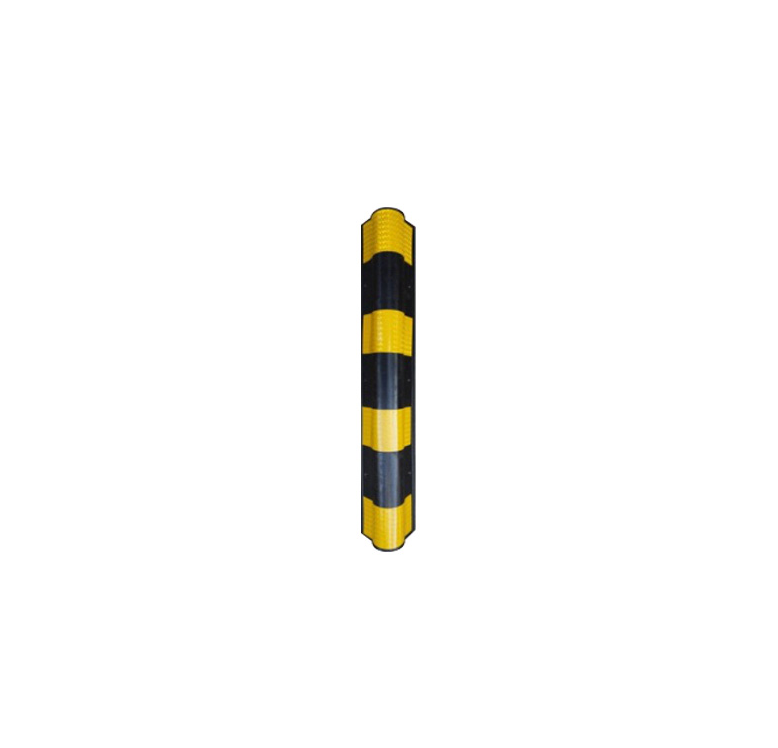
Why Corner Guard Manufacturers Are Important in High-Traffic Spaces
Why do busy spaces wear down so quickly at the edges?
In places where people move all day, walls are rarely untouched. The center of a wall usually stays fine, while the edges slowly show signs of contact. Corners take most of the impact because they sit directly in the path of movement.
Think about a narrow hallway. People turn quickly. Carts pass through. Bags swing slightly when walking. None of these actions seem strong on their own, but over time, repeated contact leaves marks.
This is where corner guard manufacturers become relevant. Their work focuses on a simple idea: reducing damage at the points where space and movement naturally meet.
Corners are not just structural details. In real use, they are contact zones.
How do corner guards actually change daily space usage?
Corner guards create a buffer between movement and structure. They sit on exposed edges and absorb or soften contact before it reaches the wall surface.
In everyday environments, this changes how space behaves:
- Walls stay cleaner for longer periods
- Small impacts no longer leave visible marks
- Corners are easier to maintain over time
- Repainting and repair cycles become less frequent
What looks like a small strip of material actually changes how a space ages.
Corner guard manufacturers focus on making this buffer consistent. The goal is not to stop movement, but to reduce the visible effect of constant contact.
Why do manufacturers matter more than the product itself?
At first glance, a corner guard seems simple. But when used in large buildings, consistency becomes the real challenge.
Different rooms, different corridors, and different usage levels all place uneven pressure on walls. If products vary too much, protection becomes uneven.
Corner guard manufacturers help solve this by maintaining uniform structure across large production runs. This matters because in real buildings, protection is only effective when it is predictable.
A well-made corner guard should behave the same way in a hospital corridor as it does in an office hallway. That kind of repeatability is not accidental. It comes from controlled manufacturing processes.
Where do high-traffic environments create the most pressure?
High-traffic spaces are not defined by one activity. They are defined by continuous movement. The more movement, the more indirect contact with surfaces.
| Space Type | Movement Pattern | Common Corner Pressure |
|---|---|---|
| Schools | Group movement, frequent turns | Frequent wall brushing |
| Hospitals | Equipment + patient flow | Cart and bed contact points |
| Offices | Daily entry and exit flow | Corridor corner wear |
| Retail spaces | Continuous customer movement | Display area edge contact |
| Residential blocks | Repeated daily commuting | Stair and hallway corners |
In all these environments, corners are not intentionally touched, but they are touched repeatedly anyway.
How does corner protection affect long-term maintenance work?
Without protection, corners are usually the first areas to show aging. Paint chips, small dents, and surface wear tend to appear earlier than on flat surfaces.
Maintenance teams often notice a pattern: they repair the same areas again and again. This creates repeated workload in the same locations.
Corner guards reduce this repetition. Instead of repairing damage after it happens, the surface is protected before contact reaches it.
Over time, this changes maintenance behavior:
- Less frequent repainting cycles
- Fewer patch repairs on corner edges
- More predictable upkeep schedules
- Reduced disruption in busy spaces
It does not remove maintenance work completely. It simply shifts it to a slower, more manageable rhythm.
Why is design consistency important in real buildings?
In large buildings, visual consistency matters more than it seems. If one hallway looks protected and another looks worn, the overall space feels uneven.
Corner guards help maintain a uniform appearance, especially when used across long corridors or multiple floors.
Manufacturers often aim for consistent shaping and alignment so that installations look continuous rather than scattered.
This is not only about appearance. Consistency also helps users recognize protected areas without needing explanation. Over time, it becomes part of the visual language of the building.
How do corner guards influence movement behavior?
People naturally adjust their movement based on space condition. In narrow or crowded areas, even small changes in wall edges can influence how carefully people walk.
When corners are reinforced, movement often becomes smoother. There is less hesitation near edges, especially in busy corridors where multiple people pass at the same time.
Corner guards do not change human behavior directly. Instead, they reduce the consequences of accidental contact. That alone is enough to make movement feel less tense in tight spaces.
This effect is subtle but noticeable in environments with constant foot traffic.
Why do installation details affect long-term performance?
Even a well-made corner guard depends on correct placement. If alignment is uneven, or if installation is inconsistent, performance can drop over time.
In high-traffic environments, small installation differences become more visible. A slightly loose edge can collect repeated contact. A misaligned section can break visual continuity.
That is why manufacturers often design products with installation practicality in mind. The easier it is to align and secure, the more stable the long-term result.
In large projects, this also reduces variation between different installation teams or different building areas.
How do corner guards support long-term space planning?
Space planning is not only about layout design. It is also about how surfaces will age after years of use.
Corners are usually the first elements to show visible wear. Without protection, this creates a cycle of repair and repainting.
With corner guards in place, aging becomes slower and more controlled. Surfaces remain visually stable for longer periods, even in high-use environments.
This supports long-term planning in a practical way:
- Buildings maintain a more consistent appearance
- Repair work becomes less frequent in key areas
- Maintenance budgets are easier to predict
- Interior spaces feel more stable over time
Corner protection becomes part of the background structure of space management.
Why do corner guard manufacturers remain relevant in modern interiors?
Modern interiors are designed for constant use. Whether it is a public building, a workplace, or a shared facility, movement is continuous and unavoidable.
In this context, corner guard manufacturers play a quiet but ongoing role. Their products do not stand out visually, but they support the parts of the building that receive the most contact.
Instead of changing how people move, they adjust how spaces respond to movement. That small adjustment is what keeps high-traffic environments functioning smoothly over time.
ZHEJIANG LUBA TRAFFIC TECHNOLOGY CO., LTD. * TRAFFIC SAFETY, WE LEAD EVERY STEP * ZHEJIANG LUBA TRAFFIC TECHNOLOGY CO., LTD. * TRAFFIC SAFETY, WE LEAD EVERY STEP * ZHEJIANG LUBA TRAFFIC TECHNOLOGY CO., LTD. * TRAFFIC SAFETY, WE LEAD EVERY STEP * ZHEJIANG LUBA TRAFFIC TECHNOLOGY CO., LTD.
ZHEJIANG LUBA TRAFFIC TECHNOLOGY CO., LTD. * TRAFFIC SAFETY, WE LEAD EVERY STEP * ZHEJIANG LUBA TRAFFIC TECHNOLOGY CO., LTD. * TRAFFIC SAFETY, WE LEAD EVERY STEP * ZHEJIANG LUBA TRAFFIC TECHNOLOGY CO., LTD. * TRAFFIC SAFETY, WE LEAD EVERY STEP * ZHEJIANG LUBA TRAFFIC TECHNOLOGY CO., LTD.

Zhejiang Luba Traffic Technology Co., Ltd. has been dedicated to the R&D and production of rubber and plastic products in the traffic facilities field since its establishment in 2001.
- (+86) 15724246878
- [email protected]
- No.399 West Guangming Road, Sanmen, Taizhou, Zhejiang, China.
Contact us to get our latest product information.
Copyright © Zhejiang Luba Traffic Technology Co.,Ltd. Rights Reserved.

Rubber Speed Hump Supplier