

 English
 简体中文
 Русский
 Español

ZHEJIANG LUBA TRAFFIC TECHNOLOGY CO., LTD. * TRAFFIC SAFETY, WE LEAD EVERY STEP * ZHEJIANG LUBA TRAFFIC TECHNOLOGY CO., LTD. * TRAFFIC SAFETY, WE LEAD EVERY STEP * ZHEJIANG LUBA TRAFFIC TECHNOLOGY CO., LTD. * TRAFFIC SAFETY, WE LEAD EVERY STEP * ZHEJIANG LUBA TRAFFIC TECHNOLOGY CO., LTD.
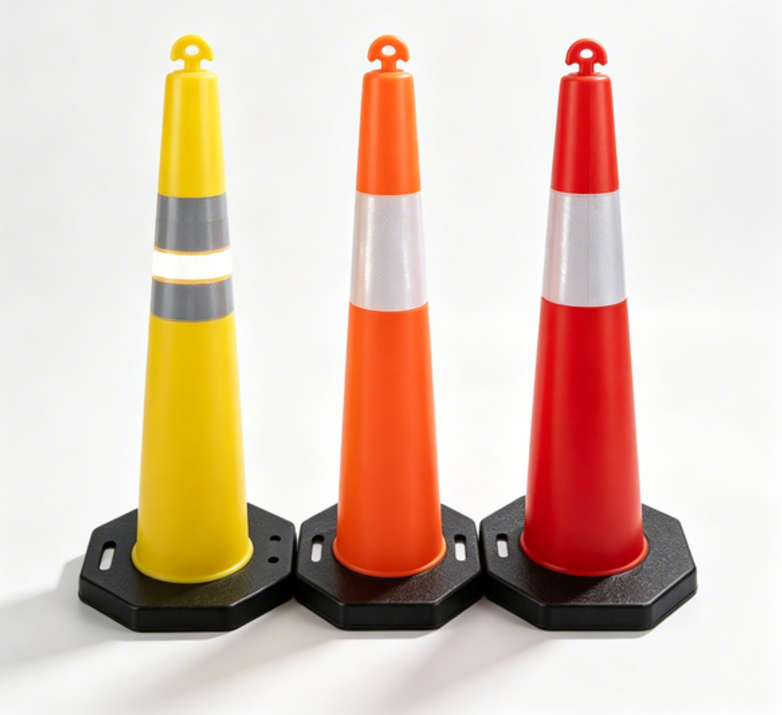
Can Flexible Warning Posts Be Used for Lane Separation
Traffic areas keep getting more crowded and complicated, and clear lane guidance has quietly become one of those everyday necessities nobody notices until it's missing. Drivers navigate parking lots, construction zones, access roads, loading docks, and temporary layouts constantly — and painted lines on their own often just don't cut it visually.
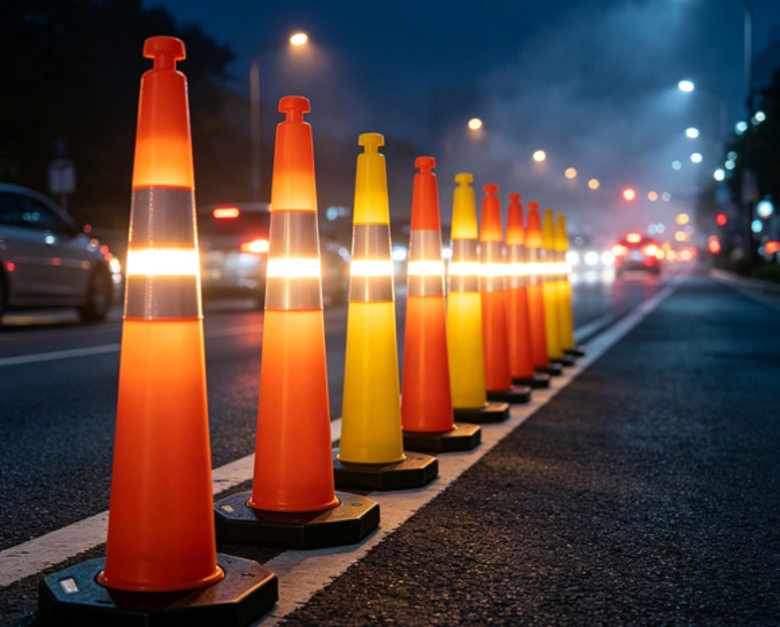
Flexible warning post fill that gap. They draw a visible line between traffic areas without turning the space into a walled-off corridor. Since these posts bend on contact rather than fighting back, they offer a genuinely different approach to lane separation compared to rigid barriers.
So — can flexible posts actually handle lane separation duty? Mostly, yes. Whether they work well comes down to the traffic environment, what the separation is actually for, how the posts get installed, and what kind of vehicles are moving through the area. In practice, flexible posts show up guiding vehicles, marking where lanes end, splitting opposing traffic flows, and defining paths that shift or change over time.
What Role Do Flexible Warning Posts Play in Lane Separation?
Warning posts act as visible markers between different traffic paths. They do not usually create a solid physical wall. Instead, they give drivers a clear visual reference that shows where one traffic area ends and another begins.
This can be useful when vehicles need to follow a defined path but full barriers would make the area difficult to access. A line of posts can make the intended direction easier to understand while keeping the surrounding space relatively open.
Flexible posts can also help organize traffic where road layouts change. Construction areas are a common example. Vehicle paths may shift as work progresses, so the separation system needs to be easy to understand and practical to adjust. Flexible delineators are used for channelizing traffic through changing work areas and for marking different traffic paths.
The same idea can apply to parking facilities, driveways, industrial areas, and other spaces where vehicles share limited space. The posts create a visual boundary without making the lane feel completely closed.
Why Are Flexible Warning Posts Suitable for Separating Lanes?
One important feature is flexibility. A rigid post may remain in place when a vehicle makes contact with it. A flexible post is designed to give way instead. Depending on its construction, it can bend and return toward its normal position after contact.
This characteristic can be useful in areas where occasional vehicle contact is possible. Parking lots and narrow traffic paths can leave little room for error. A driver may turn too closely to a boundary or misjudge the available space. A flexible post can make contact less disruptive than a rigid obstruction.
Visibility is another important factor. Warning posts are often designed with bright surfaces or reflective areas so that drivers can recognize them in different lighting conditions. This helps create a continuous visual line along the lane boundary. Current traffic safety products are commonly used for lane guidance, parking areas, construction zones, and other locations where drivers need a clear path.
The purpose is not simply to place objects on the road. The posts need to communicate the intended traffic pattern clearly.
Where Can Flexible Warning Posts Be Used for Lane Separation?
Warning posts can be used in several traffic environments. Their role changes slightly depending on the location.
In parking areas, they can separate incoming and outgoing traffic or guide vehicles around corners and restricted areas. They can also help define the edge of a driving lane where parked vehicles or structures are nearby. Flexible posts are already used for traffic guidance in parking lots and other vehicle access areas.
Construction zones are another common application. Temporary lane arrangements can be confusing when drivers encounter cones, signs, equipment, and changing road surfaces. A visible line of flexible posts can help establish a clearer route through the work area.
They may also be considered for:
| Application | Role of Flexible Warning Posts |
|---|---|
| Parking areas | Separate vehicle movements and define driving paths |
| Construction zones | Guide vehicles through changing traffic layouts |
| Access roads | Mark the boundary between different traffic movements |
| Industrial areas | Help organize vehicle routes around working spaces |
| Loading areas | Separate vehicle paths from nearby activity |
| Bicycle lane areas | Create a visible boundary between vehicles and cyclists |
| Temporary traffic layouts | Provide a clear visual guide when traffic patterns change |
| Roadway transitions | Help drivers recognize changes in traffic direction |
Their suitability depends on the environment. A post used in a low-speed parking area may serve a different purpose from one used on a busy roadway. The surrounding traffic conditions should always be considered before selecting a lane separation system.
How Do Flexible Warning Posts Help Drivers Follow a Lane?
Lane separation is not only about preventing vehicles from crossing a boundary. It is also about helping drivers understand where they should travel.
A line of warning posts creates a visual path. When the posts are placed in a logical arrangement, drivers can follow them much like they would follow a painted lane marking. The vertical shape makes the boundary more noticeable than a line on the pavement alone.
This can be especially useful in areas where the road surface contains many markings. Parking facilities, for example, may include arrows, parking lines, pedestrian paths, signs, and other visual information. Adding a physical visual marker can make the intended vehicle route easier to recognize.
Flexible posts can also make changes in road direction more obvious. A row that follows a curve tells drivers that the traffic path is changing. This is one reason flexible delineators are used to guide traffic around curves and through changing road layouts.
The spacing and placement should create a continuous visual idea rather than an isolated collection of posts. Drivers need to understand the path quickly. A confusing arrangement may create the opposite effect.
Can Flexible Warning Posts Separate Opposing Traffic?
Yes, warning posts can be used to visually separate opposing traffic movements in suitable environments. This is different from creating a heavy physical median. The posts provide a visible boundary that tells drivers which side of the traffic area they should use.
This approach can be useful where vehicles need guidance but the road operator still wants the area to remain relatively open. Traffic safety suppliers describe flexible delineators as suitable for centerline separation, opposing traffic lane division, exit lane guidance, and other traffic channelization uses.
However, a flexible post should not automatically be treated as a replacement for every type of barrier. A visual lane separator and a protective barrier serve different purposes.
If the area requires strong physical protection against vehicle intrusion, a more substantial system may be appropriate. Flexible warning posts are generally more useful when the main goal is to guide traffic, clarify boundaries, or discourage unnecessary lane changes.
This distinction is important for buyers and traffic planners. The question should not simply be whether a post can separate lanes. The more useful question is what kind of separation the site actually needs.
How Does Flexibility Affect Lane Separation?
Flexibility changes the way the lane boundary behaves when a vehicle comes close to it.
A rigid structure can create a hard obstacle. A flexible post can move when contacted, which may reduce the chance of the post itself becoming a major obstruction. Some flexible delineator systems are specifically designed to rebound after impact and return to an upright position.
This can be valuable in areas with frequent vehicle movement. A post positioned near a turning lane may occasionally be touched by a tire or vehicle body. If the post can recover its position, the lane guidance may continue without requiring immediate replacement.
At the same time, flexibility should not be confused with unlimited impact resistance. Different products are designed for different environments. The expected traffic conditions, installation surface, traffic speed, and frequency of contact all influence whether a particular flexible post is suitable.
Maintenance should also be considered. Even when a post is designed to bend and recover, repeated contact can eventually affect its condition. Regular visual checks can help identify posts that have become damaged, displaced, or less visible.
What Should Be Considered When Installing Flexible Warning Posts for Lane Separation?
Installation has a direct effect on how clearly the lane separation works. The posts need to remain in their intended positions and form a clear visual path.
The surface is an important consideration.Warning posts may use different types of bases or mounting approaches depending on the application. Some systems are designed for surface installation, while others can be installed using different anchoring methods. Public traffic guidance materials also show flexible posts used with roadway and modular curb arrangements.
The layout should match the movement of traffic. Posts that are too close together may make the area feel unnecessarily restricted. Posts that are too far apart may fail to create a clear visual boundary.
Several practical points should be reviewed:
Traffic direction
The post line should clearly show where vehicles are expected to travel.
Visibility
The posts should remain noticeable during the lighting conditions normally found at the site.
Surface condition
The installation surface should be suitable for the selected mounting method.
Vehicle movement
Turning areas and vehicle paths should be considered before positioning the posts.
Maintenance access
Damaged or displaced posts should be easy to inspect and replace.
Nearby users
Pedestrians, cyclists, workers, and other road users may share the same space.
Good lane separation is not created by the posts alone. Their position, visibility, surrounding markings, and overall traffic layout all contribute to how well the system communicates with drivers.
Can Flexible Warning Posts Work With Other Lane Separation Methods?
Warning posts can work alongside other traffic control elements. In many real-world environments, no single device provides all the information a driver needs.
Painted lane markings can show the intended path on the pavement. Signs can provide instructions. Raised elements can define an edge. Flexible posts can add a vertical visual reference that makes the boundary easier to see.
This combination can be particularly useful in temporary traffic layouts. A construction area may need signs, markings, barriers, and flexible delineators at the same time. Each element has a different role.
Flexible posts can also be combined with modular curb systems in certain roadway applications. Guidance from the City of Orlando describes flex posts being used to separate roadway space from walking or cycling areas and as part of lane-separation arrangements.
The key is coordination. If different traffic devices send conflicting messages, drivers may hesitate or choose the wrong path. The lane separation system should present a simple and consistent visual message.
For buyers, this means the selection process should begin with the traffic problem rather than the product itself. Consider whether the site needs visual guidance, physical separation, pedestrian protection, temporary channelization, or a combination of these functions.
Flexible warning posts can be a practical option when the goal is to make lane boundaries visible while keeping traffic areas relatively open. Their flexible construction, visibility, and range of mounting options make them suitable for many parking, roadway, construction, and traffic-management applications.
ZHEJIANG LUBA TRAFFIC TECHNOLOGY CO., LTD. * TRAFFIC SAFETY, WE LEAD EVERY STEP * ZHEJIANG LUBA TRAFFIC TECHNOLOGY CO., LTD. * TRAFFIC SAFETY, WE LEAD EVERY STEP * ZHEJIANG LUBA TRAFFIC TECHNOLOGY CO., LTD. * TRAFFIC SAFETY, WE LEAD EVERY STEP * ZHEJIANG LUBA TRAFFIC TECHNOLOGY CO., LTD.
ZHEJIANG LUBA TRAFFIC TECHNOLOGY CO., LTD. * TRAFFIC SAFETY, WE LEAD EVERY STEP * ZHEJIANG LUBA TRAFFIC TECHNOLOGY CO., LTD. * TRAFFIC SAFETY, WE LEAD EVERY STEP * ZHEJIANG LUBA TRAFFIC TECHNOLOGY CO., LTD. * TRAFFIC SAFETY, WE LEAD EVERY STEP * ZHEJIANG LUBA TRAFFIC TECHNOLOGY CO., LTD.

Zhejiang Luba Traffic Technology Co., Ltd. has been dedicated to the R&D and production of rubber and plastic products in the traffic facilities field since its establishment in 2001.
- (+86) 15724246878
- [email protected]
- No.399 West Guangming Road, Sanmen, Taizhou, Zhejiang, China.
Contact us to get our latest product information.
Copyright © Zhejiang Luba Traffic Technology Co.,Ltd. Rights Reserved.

Rubber Speed Hump Supplier