

 English
 简体中文
简体中文 Русский
 Español
ZHEJIANG LUBA TRAFFIC TECHNOLOGY CO., LTD. * TRAFFIC SAFETY, WE LEAD EVERY STEP * ZHEJIANG LUBA TRAFFIC TECHNOLOGY CO., LTD. * TRAFFIC SAFETY, WE LEAD EVERY STEP * ZHEJIANG LUBA TRAFFIC TECHNOLOGY CO., LTD. * TRAFFIC SAFETY, WE LEAD EVERY STEP * ZHEJIANG LUBA TRAFFIC TECHNOLOGY CO., LTD.
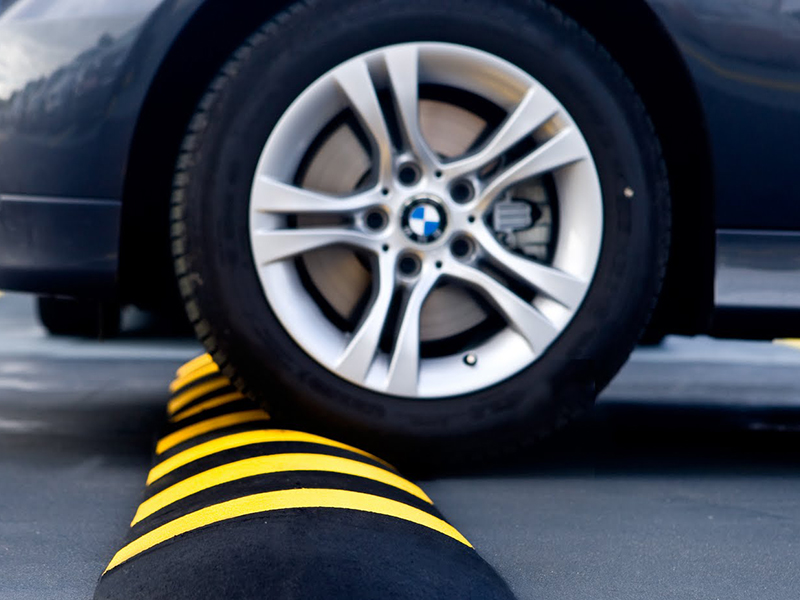
Rubber Kerb Ramp Revolution: How Aging Societies Are Reshaping Urban Accessibility?
When Ms. Lin Wei, a wheelchair user in Hangzhou’s Xihu District, encountered the newly installed yellow Rubber Kerb Ramp at her local crosswalk, her daily struggle turned into seamless independence. "Before, I needed assistance to cross this curb. Now, this Rubber Kerb Ramp lets me navigate safely in seconds," she explains. Her experience mirrors a nationwide infrastructure transformation driven by demographic urgency and policy mandates.
Policy Tsunami Meets Silver Tsunami
China’s rapidly aging population, with citizens over 60 exceeding 21% in 2025 according to the Ministry of Civil Affairs data, has accelerated regulatory action. The 2024 Barrier-Free Environment Construction Law mandates universal accessibility upgrades, triggering what industry insiders call "the Rubber Kerb Ramp surge."
Shenzhen exemplifies this shift, allocating ¥210 million (USD$29M) for pedestrian infrastructure upgrades in 2024 alone. "We’ve installed over 8,000 rubber kerb ramp units at bus stops and intersections since January," confirms city infrastructure director Zhao Ming. "Each Rubber Kerb Ramp solves a critical mobility barrier for wheelchair users, parents with strollers, and delivery workers."
Engineering Meets Urgency
Traditional concrete ramps require days of construction and road closures. By contrast, crews installed 37 rubber kerb ramp units along Shanghai’s Huaihai Road in a single overnight operation."Speed matters in urban centers," states engineer Li Qiang of SinoBuild Technologies. "A rubber kerb ramp deploys in 15 minutes with minimal disruption."
Performance data validates material choices:
High-density recycled rubber withstands 5-ton loads
Diamond-tread surfaces maintain a 0.83 friction coefficient even during Hangzhou’s monsoon season
Temperature tolerance (-30°C to 80°C) prevents cracking in northern cities like Harbin
The Community Impact Multiplier
Hangzhou’s Cuiyuan residential community saw immediate benefits after installing 28 rubber kerb ramp access points last autumn. Property manager Chen Xiaolong notes, "Grocery delivery times dropped 40% for mobility-impaired residents. More significantly, social isolation complaints decreased by 65%." The rubber curb ramp installations became catalysts for broader accessibility upgrades, including tactile paving.
International compliance further fuels adoption. "Global brands demand ADA/ISO-compliant facilities," explains Grace Wu, procurement head at a Foxconn industrial park. "Our new rubber kerb ramp systems ensure seamless accessibility across our 12-hectare campus."
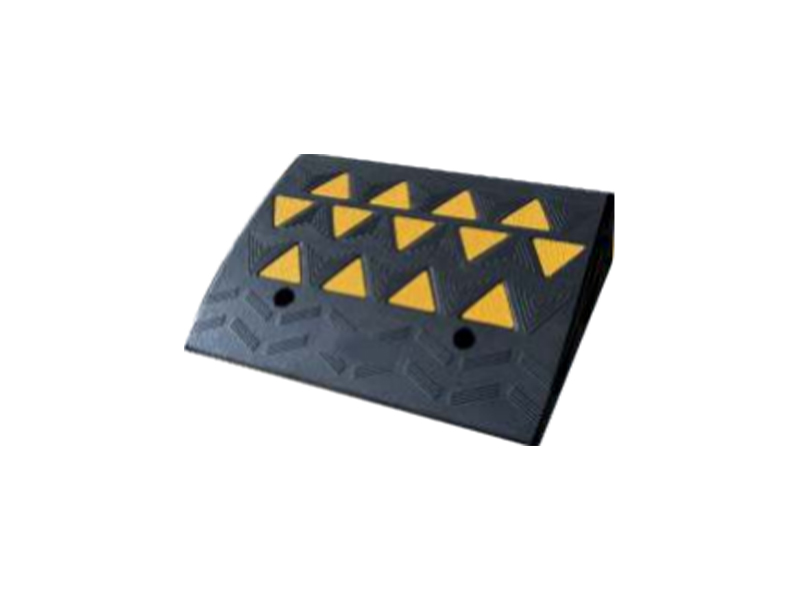
Market Response and Innovation
Manufacturers struggle to meet orders. Ningbo-based SafePath Ramps doubled production capacity in 2024. " "We’re shipping 40,000 Rubber Kerb Ramp units monthly," reveals CEO David Wang. "Export demand grew 300% after EU accessibility directives tightened."
Innovation focuses on customization.
UV-resistant color options for historic districts
Modular rubber curb ramp systems for irregular curbs
Recycled-content verification (up to 70% post-consumer rubber)
Measuring Progress in Concrete Terms
Shanghai’s 2024 Accessibility Audit revealed 92% compliance at rubber kerb ramp-equipped crosswalks versus 63% at traditional ramps. "The visual contrast between old and new infrastructure is striking," observes disability advocate Emma Zhang. "When I see that distinctive rubber slope, I know I won’t be stranded at the curb."
With Beijing allocating ¥5 billion (USD$690M) for nationwide accessibility upgrades through 2026, the rubber curb ramp transition shows no signs of slowing. As Director Zhao Ming notes while inspecting a freshly installed rubber kerb ramp in Shenzhen, "This isn’t about compliance checkboxes. Each slope represents someone’s regained independence." "For citizens like Ms. Lin, that independence is measured in seamless transitions—one curb, one Rubber Kerb Ramp, and one dignified journey at a time."
ZHEJIANG LUBA TRAFFIC TECHNOLOGY CO., LTD. * TRAFFIC SAFETY, WE LEAD EVERY STEP * ZHEJIANG LUBA TRAFFIC TECHNOLOGY CO., LTD. * TRAFFIC SAFETY, WE LEAD EVERY STEP * ZHEJIANG LUBA TRAFFIC TECHNOLOGY CO., LTD. * TRAFFIC SAFETY, WE LEAD EVERY STEP * ZHEJIANG LUBA TRAFFIC TECHNOLOGY CO., LTD.
ZHEJIANG LUBA TRAFFIC TECHNOLOGY CO., LTD. * TRAFFIC SAFETY, WE LEAD EVERY STEP * ZHEJIANG LUBA TRAFFIC TECHNOLOGY CO., LTD. * TRAFFIC SAFETY, WE LEAD EVERY STEP * ZHEJIANG LUBA TRAFFIC TECHNOLOGY CO., LTD. * TRAFFIC SAFETY, WE LEAD EVERY STEP * ZHEJIANG LUBA TRAFFIC TECHNOLOGY CO., LTD.

Zhejiang Luba Traffic Technology Co., Ltd. has been dedicated to the R&D and production of rubber and plastic products in the traffic facilities field since its establishment in 2001.
- (+86) 15724246878
- [email protected]
- No.399 West Guangming Road, Sanmen, Taizhou, Zhejiang, China.
Contact us to get our latest product information.
Copyright © Zhejiang Luba Traffic Technology Co.,Ltd. Rights Reserved.

Rubber Speed Hump Supplier